The Chhath Puja 2026 date is set: the festival runs for four days, from Friday, November 13 to Monday, November 16. The main day — Sandhya Arghya, the evening offering to the setting sun — falls on Sunday, November 15. It is the biggest festival of the year for crores of families in Bihar, Jharkhand, eastern Uttar Pradesh and Nepal, built around a strict 36-hour fast without water and prayers offered standing in a river at sunrise and sunset.
Quick answers
Dates: Nahay Khay on Nov 13, Kharna on Nov 14, Sandhya Arghya (evening) on Nov 15, Usha Arghya (morning) on Nov 16. Timings: Sandhya Arghya is offered at sunset — around 5:00–6:00 PM depending on your city; Usha Arghya at sunrise, around 5:50–6:45 AM. Check your local panchang for the exact minute. What it is: a four-day festival for Surya (the Sun god) and Chhathi Maiya, with no idol and no priest — the devotee prays directly to the sun, standing in water.
The four days at a glance
| Day | Date 2026 | Ritual | What happens |
|---|---|---|---|
| 1 | Fri, Nov 13 | Nahay Khay | Holy bath; one pure meal. The festival begins. |
| 2 | Sat, Nov 14 | Kharna (Lohanda) | Day-long fast, broken after sunset with kheer and roti. |
| 3 | Sun, Nov 15 | Sandhya Arghya | Main day: offering to the setting sun at the ghat. |
| 4 | Mon, Nov 16 | Usha Arghya & Parana | Offering to the rising sun; the fast ends. |
These dates are confirmed across published 2026 schedules from SmartPuja, HinduTone, Times Now and ET Now. Chhath always falls on Kartik Shukla Shashthi — the sixth day of the bright half of the month of Kartik — about eight days after Diwali. If you need the full festival calendar, see our Diwali 2026 5-day guide. The word “Chhath” itself comes from the Sanskrit word for six.
City-wise arghya timings
Sandhya Arghya is at sunset on November 15; Usha Arghya at sunrise on November 16. These city times are approximate — your local panchang may differ by a few minutes:
| City | Sunset, Nov 15 (Sandhya Arghya) | Sunrise, Nov 16 (Usha Arghya) |
|---|---|---|
| Patna | 5:02 PM | 6:08 AM |
| Delhi | 5:29 PM | 6:45 AM |
| Kolkata | 4:54 PM | 5:51 AM |
| Mumbai | 6:01 PM | 6:47 AM |
| Ranchi | 5:05 PM | 6:04 AM |
| Varanasi | 5:11 PM | 6:17 AM |
Source: HinduTone’s 2026 guide, published October 10. For North India generally, sunset on Nov 15 is about 5:28 PM and sunrise on Nov 16 about 6:44 AM, per GaneshaSpeaks’ panchang-based calendar. The Shashthi tithi itself begins at 11:23 PM on Nov 14 and ends at 2:00 AM on Nov 16, per Drik Panchang via News18.
Day 1 — Nahay Khay (Nov 13): bathe, clean, eat once
“Nahay Khay” means, roughly, bathe and eat. The person keeping the fast — called the vrati — bathes in a river, pond, or at home with clean water. Then the house is cleaned, the kitchen scrubbed, and one simple meal is cooked: rice, chana dal and bottle gourd (lauki), made without onion or garlic. That is the only full meal of the day.
From this point on, purity rules everything. Nothing cooked for the offering is tasted before it is offered. Some families clean the house with cow dung and Ganga water on this day, per traditional guides. New or thoroughly washed utensils only.
Day 2 — Kharna (Nov 14): the fast tightens
Kharna is also called Lohanda. The vrati fasts the whole day — no food, and traditionally no water either from morning to evening. At sunset, after a puja, the fast is broken with a special prasad: kheer made with jaggery (gur), roti and fruit. The kheer is offered to the Sun first, then shared with family and neighbours. Only after the vrati has eaten do other family members eat — that rule is strict on Kharna day.
And this is the turning point. The moment the Kharna meal ends, the famous 36-hour nirjala fast begins. Nirjala means without water. No food, no water, for a day and a half, straight through the third day and into the fourth morning. It is one of the toughest fasts in the Hindu calendar, and it is the heart of Chhath.
A practical note for first-timers: tradition is strict, but health comes first. Guides like News24 note that if a full waterless fast is not possible for health reasons, people consult a doctor and keep a light fruit diet instead. The festival’s spirit is devotion, not harm.
Day 3 — Sandhya Arghya (Nov 15): the main evening
This is the day you have seen in photographs. In the late afternoon, whole families carry the soop — wide bamboo winnowing baskets — down to the riverbank. Each soop holds thekua (the signature wheat-and-jaggery sweet), rice laddus, bananas, coconut, sugarcane, and lit diyas.
The vrati wades into the water, often waist-deep, and stands facing the west. As the sun sets, she offers arghya — water poured from cupped hands, sometimes with milk — to the setting sun. Folk songs, the Chhath geet, rise from the ghats. “Kanch hi baans ke bahangiya” is the one you will hear everywhere.
The ghats themselves are decorated like a wedding venue — diyas, marigold, banana stems. In Patna, along the Ganga, lakhs gather. In Delhi’s Purvanchali neighbourhoods, temporary ghats come up on the Yamuna banks.
Day 4 — Usha Arghya (Nov 16): sunrise, then the fast breaks
Before dawn, families return to the same ghat. This time the vrati faces east. Arghya goes to the rising sun — thanks for what is coming, after the previous evening’s thanks for what has passed. Then, finally, the fast breaks. This is parana. The prasad is distributed to everyone present, and the vrati eats.
Nothing is wasted. Leftover prasad goes to family, neighbours, even animals — throwing offerings away is against the rules.
What you need: the samagri checklist
- Bamboo soop (winnow) and daura baskets — new or completely clean
- Thekua, rice laddus, kheer ingredients (jaggery, rice, milk, ghee)
- Whole sugarcane with leaves, bananas, coconut, seasonal fruits
- Clay diyas, oil and wicks; incense; a kalash with water
- Sindoor, turmeric, flowers, red cloth
- New cotton clothes — yellow, orange or red are traditional for the vrati
Brass utensils are considered best for cooking prasad; steel and glass are avoided by the strict, per India TV’s guide. Many families cook the Kharna kheer and thekua on a clay chulha (earthen stove), though a cleaned gas stove is accepted where a chulha is not possible.
Do’s and don’ts, in plain words
Do: bathe before any ritual; keep the house and puja area spotless; use rock salt (sendha namak), never ordinary table salt, in prasad; cook prasad with clean hands and a calm mind; let the vrati eat first; keep the surroundings plastic-free — bamboo and clay, not plastic plates and flowers.
Don’t: onion, garlic, meat, fish, eggs, alcohol or tobacco for the whole four days — not just for the vrati but ideally the whole household; no tasting prasad before it is offered; no anger, quarrels or loud music in the house during the festival; don’t wear torn or dirty clothes for the rituals; and never break the fast before the Usha Arghya is done.
Compiled from Outlook India, India TV News, News24 and IndiaHerald’s Chhath guides.
Why the setting sun comes first
Here is the thing no other major Hindu festival does. Almost every ritual worships a god at their strongest — Lakshmi at the full moon, Durga at the height of battle. Chhath bows to the sun as it sets, at its weakest moment, before it bows to it rising. Gratitude for the year that is ending comes before prayer for the year ahead. There is a whole philosophy in that one detail: faith that the light will return even when you can barely see it.
Don’t mix it up: Chhath vs Jitiya
Both festivals have a day called Nahay Khay, and both involve tough fasting by mothers — which confuses people every year. They are different festivals. Jitiya (Jivitputrika) was observed October 2–4, 2026, on Ashwin Krishna Ashtami, and is kept for children’s long life. Chhath is November 13–16, on Kartik Shukla Shashthi, and is for the Sun. Same first-day name, different month, different god, different fast.
There is also a smaller Chhath in March
Most people don’t know this. A shorter version called Chaiti Chhath is observed in the month of Chaitra (March–April) — in 2026 it ran March 22–25. Fewer families keep it, mostly in Bihar and eastern UP, but the four-day structure is the same. The November one is the big one.
If you are travelling home for Chhath
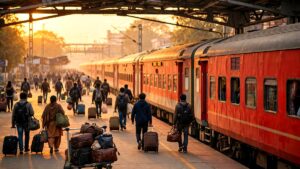
Chhath moves more people back to Bihar and eastern UP than almost any other festival — trains fill months ahead and waitlists run long. For 2026, Indian Railways runs festival special trains on the Delhi–Bihar and Delhi–UP corridors (for example the Anand Vihar–Muzaffarpur and Delhi–Sitamarhi specials), and reserved tickets open 60 days ahead — so a November 13 journey could be booked from mid-September. If trains are full, intercity buses add capacity on the same routes. Book early, travel a day ahead of Nahay Khay, and reach the ghat before sunset on the 15th.