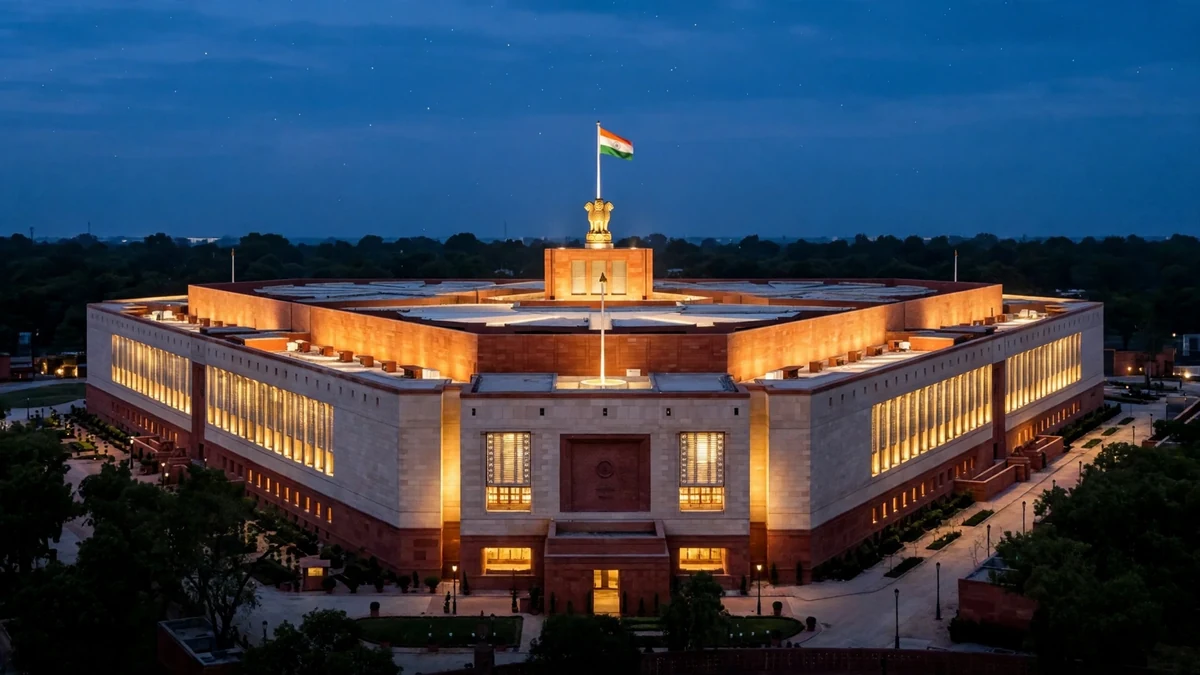
Parliament will meet again from Monday, 30 November, for a short special session. The women’s quota bill and delimitation — the redrawing of Lok Sabha seats — are at the centre of it.
Updated: 27 November 2026, 10:30 IST
Quick Read
- Parliament holds special sittings from 30 November to 3 December, with no Question Hour or Zero Hour.
- The Union Cabinet meets today, 27 November, at 1 PM and is likely to clear a fresh version of the women’s quota bill.
- The government needs 362 votes in the Lok Sabha to pass a Constitution change. The NDA has 319, so it is short by about 43.
The government announced the session on Thursday, 26 November. Parliamentary Affairs Minister Kiren Rijiju shared the news on X. The Lok Sabha will meet again on Monday, 30 November. The Rajya Sabha will meet on Wednesday, 2 December, at 11 AM. The sittings may end on 3 December.
This is not a new session. It is an extension of the Monsoon Session, which ended on 13 August. That session was adjourned sine die — a Latin phrase that means “without a day fixed for the next meeting.” It was not prorogued, which means it was not formally closed. So the government can call the same session back.
Three usual parts of Parliament’s day will not happen in this session. There will be no Question Hour, when MPs ask ministers questions. There will be no Zero Hour, when MPs raise urgent issues. And there will be no Private Members’ Business, when MPs other than ministers move their own bills. The sittings are for “essential government business” only.
The Cabinet meets today
The Union Cabinet meets today, Friday, 27 November, at 1 PM. It will meet at Sewa Teerth, and PM Narendra Modi will chair it. Sources told the news agency PTI that the Cabinet is likely to clear a fresh version of the bill that links women’s reservation to delimitation.
“Likely” is the key word here. The Cabinet has not cleared the bill yet. No minister has confirmed it in public. The exact text of the bill has not been published either. So what the Cabinet decides today is still to be seen.
PM Modi spoke about the issue on Thursday. “No force can stop the delivery of justice to women,” he said, according to Jagran. The Congress party meets today as well, to decide its plan for the session.
Also read: India declared Naxal-free: what the announcement means
The numbers problem
Here is the hard part. A change to the Constitution needs a two-thirds majority of the MPs who are present and voting. In the 543-member Lok Sabha, that means 362 votes, according to The Hindu BusinessLine.
The NDA, the ruling alliance, has 319 MPs. That figure counts a breakaway group from the Trinamool Congress and the Shiromani Akali Dal joining the alliance. Even with them, the government is short by about 43 votes.
That is why the bill failed last time. The Constitution (131st Amendment) Bill 2026, which linked a 33% quota for women to delimitation, was defeated in the Lok Sabha in April 2026. It did not get the votes it needed.
| Figure | Number |
|---|---|
| Total Lok Sabha seats | 543 |
| Votes needed for a Constitution change | 362 (two-thirds) |
| NDA strength | 319 |
| Shortfall | About 43 |
Put it in plain terms. The NDA holds about 59% of the House. It needs about 67%. The gap is small in one sense — 43 votes out of 543. But in a House where the Opposition is united against linking the quota to delimitation, 43 votes are hard to find.
A new plan: raise every state’s seats by half
The government is now weighing a different idea. The Morning Standard reports that it may raise Lok Sabha seats by a flat 50% across the board. Each state’s tally would rise in the same proportion. The total would go from 543 to about 814 seats.
Why does that help? Under a flat rise, no state loses its share of seats. A state with 40 seats today would get 60. A state with 10 would get 15. The balance between states stays the same, even as the House grows.
Southern states have a clear fear about the other option. If seats are shared out by population, northern states like Uttar Pradesh and Bihar would gain more seats, because their populations grew faster. Southern states controlled population growth, and they fear their voice in Parliament would shrink in share. That is the fight at the heart of delimitation.
Also read: BJP-SAD Punjab alliance revived after five years
What the Opposition wants
The Opposition has a simpler demand. It wants the women’s quota passed within the existing 543 seats, without linking it to delimitation at all. In its view, the quota law of 2023 is already on the books. It only needs to be put into force. Tying it to a fresh delimitation exercise delays it by years.
The government disagrees. Its stand is that the quota needs new seats so that no sitting MP loses his seat to make room for a woman candidate. The April bill tried to do both at once — more seats and the quota. It failed. Now the government is trying again, with the numbers still short.
That is what makes this session a test. The government must either win over Opposition MPs, or find a version of the bill the Opposition can back. Neither is easy in a four-day sitting with no Question Hour, where the focus will be on the vote itself.
What we still don’t know
Three things are not yet clear. First, the exact text of the fresh bill has not been published. Second, the Cabinet’s decision today is “likely” as per sources, not confirmed. Third, it is not known whether the government will push the bill to a vote in this short session, or use the session to build support for a later vote.
One note on numbers: some reports carried muddled figures for the vote maths. This article uses The Hindu BusinessLine’s figures — 362 votes needed, NDA at 319 — and no other count.
Also read: SC on Bengal SIR: 22 lakh voters in first list
What happens next
The Cabinet meets at 1 PM today. If it clears the bill, the text should reach Parliament before the session opens on Monday. The Lok Sabha sits from 30 November, the Rajya Sabha from 2 December, and the session may end on 3 December. Watch the vote count first — 362 is the number that decides everything.
FAQ
When does Parliament meet again?
The Lok Sabha reconvenes on Monday, 30 November 2026, and the Rajya Sabha on Wednesday, 2 December, at 11 AM. The special sittings may conclude on 3 December.
How many votes does the women’s quota bill need in the Lok Sabha?
It needs a two-thirds majority of members present and voting — 362 votes in the 543-member House, according to The Hindu BusinessLine. The NDA has 319 MPs, so it is short by about 43.
What is the flat 50% delimitation plan?
It would raise every state’s Lok Sabha seats by half, taking the House from 543 to about 814 seats. Each state’s share stays the same, which is meant to calm southern states’ fears about losing voice to faster-growing northern states.
Sources
- The Hindu BusinessLine — Special Parliament session from Monday amid delimitation buzz (primary source)
- The Daily Jagran — Special Parliament session: women’s quota, delimitation in focus; Modi Cabinet to meet today
- The Daily Jagran — Special Parliament sitting: no Question Hour as all eyes on numbers over delimitation

Sasanka Sekhar Pradhan is the founder of India Presents, an India-focused news site. He covers daily box-office trackers, India news, economy explainers, sports previews and festival guides — in simple English, so readers across India can follow fast-moving stories without jargon. His focus is what a story means for the reader: the number that matters, the source behind it, and what happens next. India Presents publishes daily, with day-trackers updated as new figures come in.