
Japan has shown a test model of the rover for LUPEX, the India-Japan mission that will hunt for water ice near the Moon’s south pole. Launch is set for 2028.
Updated: 28 November 2026, 10:05 IST
Quick Read
- On 25 November 2026, Japan’s space agency JAXA showed a test model of the LUPEX rover at its Chofu centre in Tokyo, and drove it across a fake Moon surface.
- LUPEX, also called Chandrayaan-5, is a joint JAXA-ISRO mission. It will land near the Moon’s south pole and look for water ice. Launch is planned for fiscal year 2028.
- The rover will drill into the ground and measure how much water is there, and in what form. The goal is to see if Moon water can one day become rocket fuel.
On Wednesday 25 November 2026, Japan’s space agency JAXA showed reporters a test model of a rover bound for the Moon’s south pole, where it will search for water. The demo was at the agency’s Chofu Aerospace Centre in Tokyo, and Phys.org reported it the same day.
The rover is for LUPEX, short for Lunar Polar Exploration, also called Chandrayaan-5 — a joint mission of JAXA and ISRO, with launch planned for fiscal year 2028 aboard the H3-24L rocket from Tanegashima Space Center.
Fiscal year 2028 needs a plain reading: in Japan, the money year runs from April 2028 to March 2029, so launch could come any time in that window. It is still around two years away.
Project manager Takeshi Hoshino put the aim in one line: “We ultimately want to use lunar water for rocket fuel.” Find the water, learn how much there is, and see if future trips can make fuel on the Moon instead of hauling it from Earth.
Also read: Triple star system found 28 light-years away
A rover that walks on legs
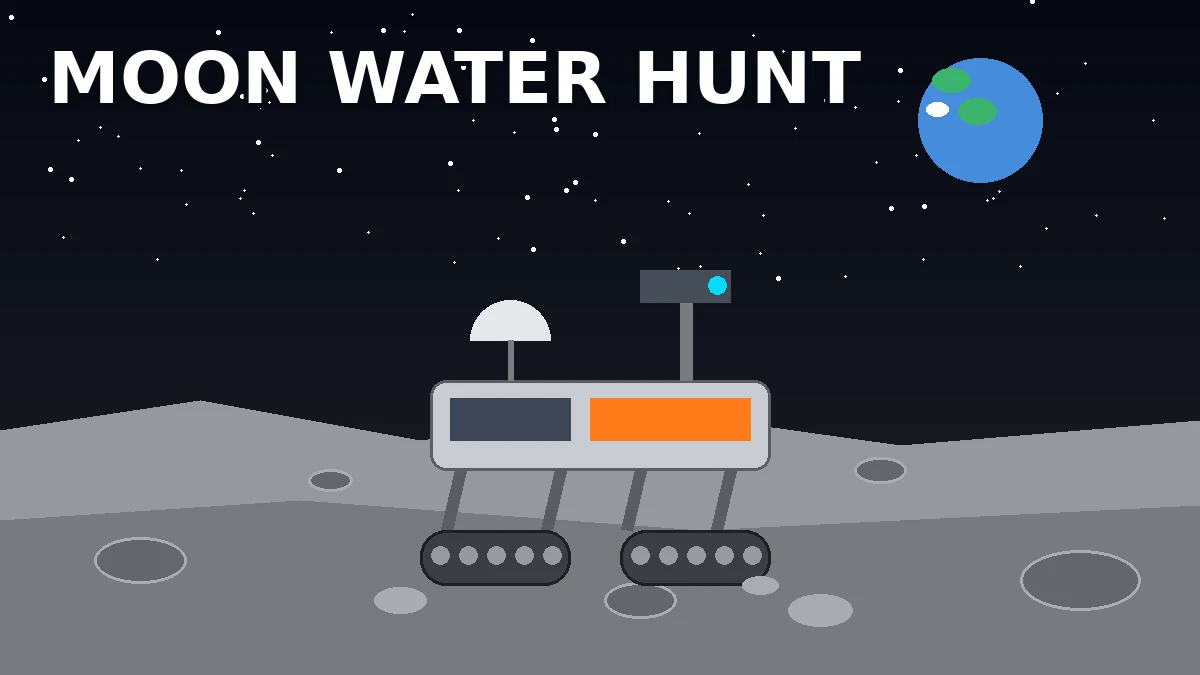
The test model has four legs, each with a caterpillar track. Think of a small tank crossed with a spider. In the Tokyo demo it moved over rocks and a dip built to look like a crater, without trouble.
JAXA has also tested it in harder ways: climbing a slope on one leg, driving on two legs, and moving in a vacuum — airless space. The Moon has no air, so parts must work in that harsh setting.
Why legs and tracks, not wheels? The Moon’s top layer is regolith, fine loose dust mixed with rock bits. Wheels can sink in it, while tracks spread the weight over more ground.
One thing must be said plainly: what JAXA showed is a development model, a test machine. The flight rover is still being designed. The demo proves the way it moves works, not that the final rover is ready.
Who builds what
The work is split down the middle. Japan builds the rover and the rocket. India builds the lander, the craft that sets the rover down, plus some science tools. NASA and ESA will also fly tools on the mission.
NASA’s tool is a neutron spectrometer, which senses water hidden under the surface. ESA’s tool will study the Moon’s very thin outer air, called the exosphere. The rover will carry a drill to dig in and take samples.
India’s government gave the mission money approval on 10 March 2025, clearing the way for ISRO to build its share. The two countries have worked on the plan together since a joint study in 2017.
Also read: Chariot-1: India’s first home-grown AI foundation models
What Moon water is good for
The rover will head for a permanently shadowed region near the south pole — a place that never sees sunlight. Deep craters at the poles sit in shade all the time, so ice inside can stay frozen for ages.
Scientists think water ice sits in those dark spots, above and below the surface. The rover will drill about 1.5 metres down and take samples, measuring how much water is there, where it sits, and what form it takes — as ice, or mixed in with dust.
The mission will also look for volatiles, substances that turn into gas with ease, like water and some frozen gases. Finding them would tell scientists what the poles are made of, and how the water got there.
Moon water could serve three uses. Crews could drink it. Split into hydrogen and oxygen, it makes rocket fuel, and oxygen is what people breathe. Making fuel on the Moon would cut the load rockets lift from Earth.
Hoshino gave a plain reason: on the space station, over 90 per cent of water is used again and again, but a rocket burns oxygen and hydrogen, and the water it makes cannot be caught and reused. “That’s why a key objective is to produce fuel on the moon for future missions, whether returning to Earth or heading onward to Mars,” he said. The results will also feed into Artemis, the US-led plan to send people back to the Moon, and plans for a Moon base one day.
How big is the new rover?
Big, by Moon rover standards. The rover with its tools is expected to weigh around 350 kg, as per JAXA’s project page, while Chandrayaan-3’s Pragyan weighed about 26 kg, as per ISRO. That makes LUPEX about 13 times heavier than Pragyan.
The gap is easy to see. Pragyan was a small six-wheel rover, about the size of a large dog. LUPEX will stand about 2 metres long and 3.3 metres tall, carrying a drill, science tools and legs that walk over rough ground.
One report called it the heaviest rover ever sent to the Moon. That does not hold up: the Soviet Lunokhod 1, which drove on the Moon in 1970, weighed 756 kg, more than twice as much. LUPEX is still one of the heaviest, and far bigger than anything India has sent before.
| Date | What happened |
|---|---|
| 2017 | India and Japan start a joint study of the LUPEX mission |
| August 2023 | Chandrayaan-3 lands near the Moon’s south pole, a first for any country |
| 10 March 2025 | India’s government gives financial sanction to the mission |
| 25 November 2026 | JAXA shows the rover test model at Chofu, Tokyo |
| Fiscal year 2028 (April 2028 – March 2029) | Planned launch on Japan’s H3-24L rocket from Tanegashima |
| About 100 days on the surface (maximum one year) | Rover hunts for water ice and drills samples at the south pole |
From Chandrayaan-3 to Chandrayaan-5
India has been here before, in a smaller way. Chandrayaan-3 landed in August 2023, making India the first country to land near the lunar south pole. Pragyan worked for about one Moon day, close to 14 Earth days.
LUPEX is India’s fifth Moon mission, hence the name Chandrayaan-5. The roles have flipped since Chandrayaan-3: back then India built both lander and rover, while this time Japan builds the rover and India builds the lander.
The joint work has been slow and steady. At a space conference in New Delhi in May 2025, LUPEX project manager Dai Asoh won the Gold Prize for his talk on the rover. The two agencies have met regularly since.
Also read: India, UAE to build next-gen defence together
What happens next
The flight rover is still being designed, and the lander is being built. The two sides must fit their parts together and test them as one machine over the next two years.
Once it lands, the rover is set to work for about 100 days, at most one year, driving to spots that may hold ice, drilling, and sending data back to Earth. If the water is there in usable amounts, the next step is a bigger question: can a Moon base one day make its own fuel? The answer starts with this rover, and its launch is set for fiscal 2028.
FAQ
What is LUPEX, or Chandrayaan-5?
It is a joint mission of Japan’s JAXA and India’s ISRO to the Moon’s south pole. A Japanese rover, carried by an Indian lander, will search for water ice near a permanently shadowed region. Launch is planned for fiscal year 2028, which runs from April 2028 to March 2029.
Is the rover shown in Tokyo the one that will fly to the Moon?
No. What JAXA showed on 25 November 2026 is a ground test model, also called a development model. The flight rover is still under design. The demo proved the rover’s way of moving works, not that the final machine is ready.
Why does water on the Moon matter?
Water can be drunk by crews, split into hydrogen and oxygen to make rocket fuel, and used to make breathable air. If Moon water can be used, future trips would need to carry less from Earth, which would cut costs and help plans for a Moon base and trips to Mars.
Sources
- Phys.org — Japan rover prototype for moon water mission (25 November 2026, primary source)
- GKToday — JAXA Chandrayaan-5/LUPEX rover prototype
- Defense Mirror — Lunar rover prototype for India-Japan mission to search for Moon’s water
- Japan Calling — Towards the Lunar South Pole: India-Japan Cooperation Enters Its Hardware Phase
- JAXA — Lunar Polar Exploration (LUPEX) project page (rover mass 350 kg, launch no earlier than 2028)
- Wikipedia — Chandrayaan-3 (Pragyan rover mass 26 kg, per ISRO mission facts)
- azmth.space — LUPEX mission facts (Lunokhod 1 mass 756 kg, for the “heaviest rover” check)

Sasanka Sekhar Pradhan is the founder of India Presents, an India-focused news site. He covers daily box-office trackers, India news, economy explainers, sports previews and festival guides — in simple English, so readers across India can follow fast-moving stories without jargon. His focus is what a story means for the reader: the number that matters, the source behind it, and what happens next. India Presents publishes daily, with day-trackers updated as new figures come in.