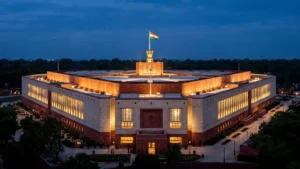
The Union Cabinet has cleared a fresh bill to raise Lok Sabha seats by 50% and bring in 33% reservation for women. The House would grow from 543 seats to a maximum of 850, and Parliament takes the bill up in a special sitting from 30 November.
Updated: 28 November 2026, 09:56 IST
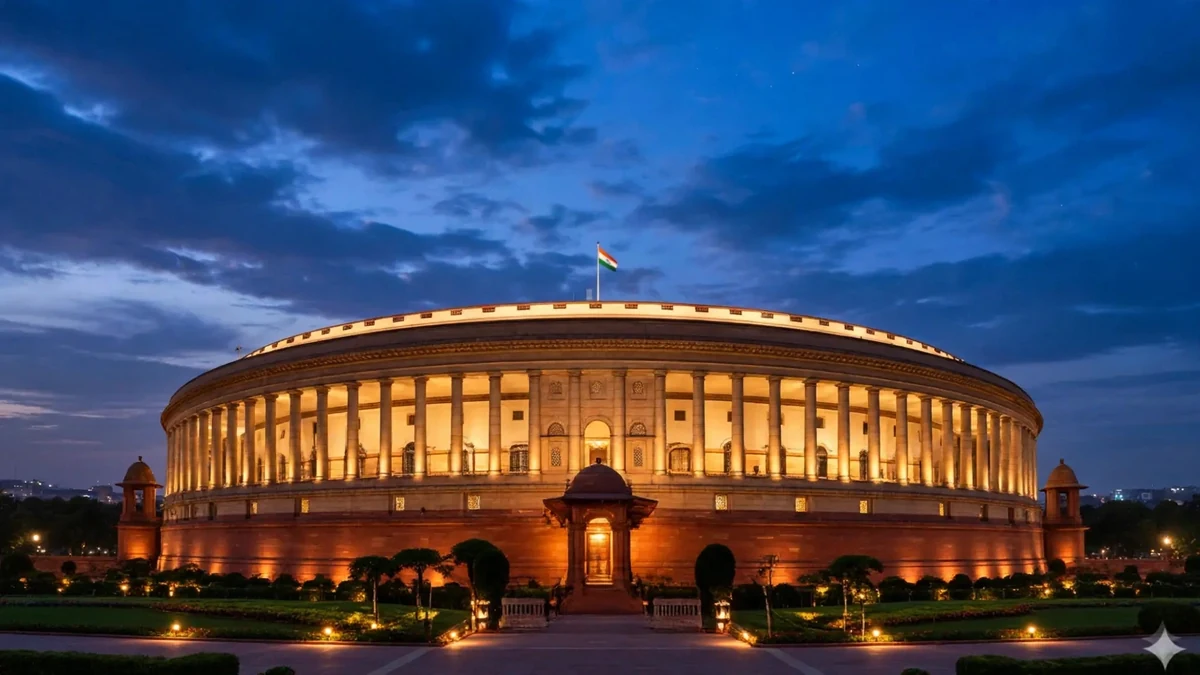
Quick Read
- The Union Cabinet, chaired by PM Narendra Modi, cleared a fresh Constitution Amendment Bill on Friday, 27 November, to bring in 33% women’s reservation through delimitation.
- Lok Sabha seats rise by 50% in every state, taking the House from 543 to a maximum of 850. Each state’s share of seats stays frozen till 2051.
- The bill needs a two-thirds majority in both Houses. The NDA has 319 MPs in the Lok Sabha and needs 362 votes, but the government says it has the numbers this time.
What the Cabinet cleared
The Union Cabinet cleared the bill on Friday, 27 November. Prime Minister Narendra Modi chaired the meeting, which began at 1 PM at Sewa Teerth in New Delhi. The bill links two big changes: more Lok Sabha seats, and 33% reservation for women in Parliament and state assemblies. That is what The Hindu BusinessLine first reported on Friday.
The package has three draft laws, The Economic Times reported on Saturday morning: a Constitution Amendment Bill, a Delimitation Bill to redraw constituency boundaries, and a supporting law. They aim to put the women’s quota into force before the 2029 general election.
The plan raises Lok Sabha seats by 50% in every state, with no exceptions. The House would grow from 543 seats to a maximum of 850 — up to 815 seats from states and 35 from Union Territories. State assemblies would also grow by 50%. The new boundaries inside each state would be drawn using the 2011 Census.
This is not a small change. The Lok Sabha has had 543 seats for decades. A jump to 850 would be the biggest change to the House in living memory — and it decides how many MPs each state sends.
Also read: Parliament returns 30 Nov: quota bill back
How the 850-seat House would look
Every state gains the same share. A state with 80 seats gets 120. A state with 20 gets 30. The table below shows the projected numbers for nine big states, worked out from the reported 50% formula. These are projections, not final figures — a Delimitation Commission will fix the final numbers. Source: The Daily Jagran’s explainer, citing Press Information Bureau releases.
| State | Seats now | Projected seats (50% rise) |
|---|---|---|
| Uttar Pradesh | 80 | 120 |
| Maharashtra | 48 | 72 |
| West Bengal | 42 | 63 |
| Bihar | 40 | 60 |
| Tamil Nadu | 39 | 59 |
| Karnataka | 28 | 42 |
| Andhra Pradesh | 25 | 38 |
| Kerala | 20 | 30 |
| Telangana | 17 | 26 |
| Five southern states combined | 129 | 195 |
The five southern states together would move from 129 seats to 195 — a gain of 66 seats. Their share of the House would stay at about 24%. No state loses its share, even as the House grows. The same 50% rise applies to assemblies, so state houses would grow too.
Women’s reservation is the other half of the deal. One-third of the seats in the bigger House would be kept for women. Our own maths puts that at about 280 seats in a full 850-seat House. The exact number will depend on the final size of the House. Seats kept for Scheduled Castes and Scheduled Tribes would also be reworked.
Why the freeze till 2051 matters
The plan also freezes each state’s share of seats till 2051. That share is still based on the 1971 population — the count from more than 50 years ago. It will stay sealed for another 25 years.
Here is why it matters. Southern states such as Tamil Nadu and Kerala kept their population growth low for decades. If seats were shared out by today’s population, fast-growing northern states would gain seats and southern states would lose share. Tamil Nadu’s former Chief Minister M K Stalin has said the state’s 7.18% share of Lok Sabha seats must not fall.
But the freeze has a cost too. It locks in a map drawn from 1971, even as India’s people have moved and grown. The 2011 Census will redraw boundaries inside each state, so voters are spread more evenly — but the share between states will not move till 2051.
Also read: Delimitation and women’s reservation, explained
The numbers test in Parliament
A change to the Constitution needs a two-thirds majority in both Houses. In the Lok Sabha, that means 362 votes out of 543, according to The Hindu BusinessLine. The ruling NDA has 319 MPs. That leaves it short by about 43 votes.
The government says it has the numbers this time. A second count in The Hindu BusinessLine puts the NDA and its allies at 335 — counting 20 Trinamool Congress rebels, seven independent MPs, the Shiromani Akali Dal’s one MP and the smaller north-eastern parties. With support from the NCP (Sharadchandra Pawar) and the DMK, the paper says, the government would likely cross 362.
The NCP (Sharadchandra Pawar) has formally backed the bill. Its spokesperson Jitendra Awhad announced the support on Friday. “Saheb’s decision remains final for me and everyone else,” he said, speaking of Sharad Pawar. The DMK, which opposed the earlier bill, is now expected to back it if its conditions are met.
April showed how hard this test is. The Constitution (131st Amendment) Bill 2026, moved in April, could not win two-thirds in the Lok Sabha and was voted down on 17 April. The 2023 law that made 33% women’s reservation legal — the Nari Shakti Vandan Adhiniyam, or 106th Amendment — still waits to take effect. It can start only after a Census and a delimitation.
Also read: BJP-SAD Punjab alliance revived after five years
What the Opposition says
The Opposition INDIA bloc meets today, Saturday, to fix its plan for the session, YourStory reported. Congress has reached out to the DMK and other Opposition parties, The Hindu reported late on Friday night. Opposition parties have argued that linking the quota to delimitation could hurt states, above all in the south, where population growth was kept low.
That leaves the next four days as a straight test of numbers. The government cannot pass it with its own MPs alone. It needs Opposition votes too.
What we still don’t know
Three things are still unclear. First, the text of the bill has not been published, so the fine print is not public yet. Second, the state-wise seat numbers here are projections from the 50% formula — the Delimitation Commission will fix the final figures, and seats kept for Scheduled Castes and Tribes will be reworked. Third, the two-thirds test has not happened yet. The government’s claim that it has the numbers is just that — a claim — till the vote is held.
One more note. The bill is likely to be introduced in the special sitting, but the government has not said on which day. The sitting runs for four days, and the bill must clear both Houses in that window — or wait for a later session.
What happens next
Parliament meets on Monday, 30 November. The Lok Sabha sits on 30 November and 1 December. The Rajya Sabha follows on 2 and 3 December. There will be no Question Hour, no Zero Hour and no Private Members’ Business. The session was announced on 26 November as an extension of the Monsoon Session, which ended on 13 August without a date fixed for the next meeting, and was never formally closed. Watch the vote count first — 362 is the number that decides it all.
FAQ
What did the Cabinet clear on 27 November?
A fresh package of three draft laws — a Constitution Amendment Bill, a Delimitation Bill and a supporting law — to raise Lok Sabha seats by 50% in every state and bring in 33% reservation for women through delimitation, using the 2011 Census. The House would grow from 543 seats to a maximum of 850, with each state’s share frozen till 2051.
How many seats will my state get?
The numbers in this article are projections from the 50% formula — for example, Uttar Pradesh 80 to 120 and Tamil Nadu 39 to 59. The final figures will be fixed by a Delimitation Commission, which will redraw boundaries inside each state using the 2011 Census.
When will the women’s quota start?
Only after the bill clears both Houses with a two-thirds majority and the delimitation exercise is done. The government aims to have it in place before the 2029 general election. The 2023 women’s reservation law is already on the books, but it takes effect only after delimitation and a Census.
Sources
- The Hindu BusinessLine — Cabinet clears fresh women’s quota Bill; Lok Sabha seats to rise 50% across all States (primary source)
- The Hindu BusinessLine — Cabinet clears fresh Constitution Amendment Bill, proposes 50% increase in Lok Sabha seats across States
- YourStory — Union Cabinet clears fresh delimitation-linked women’s reservation bill
- The Daily Jagran — Delimitation to expand Lok Sabha seats by 50%: what it means for states, House balance and women’s quota

Sasanka Sekhar Pradhan is the founder of India Presents, an India-focused news site. He covers daily box-office trackers, India news, economy explainers, sports previews and festival guides — in simple English, so readers across India can follow fast-moving stories without jargon. His focus is what a story means for the reader: the number that matters, the source behind it, and what happens next. India Presents publishes daily, with day-trackers updated as new figures come in.