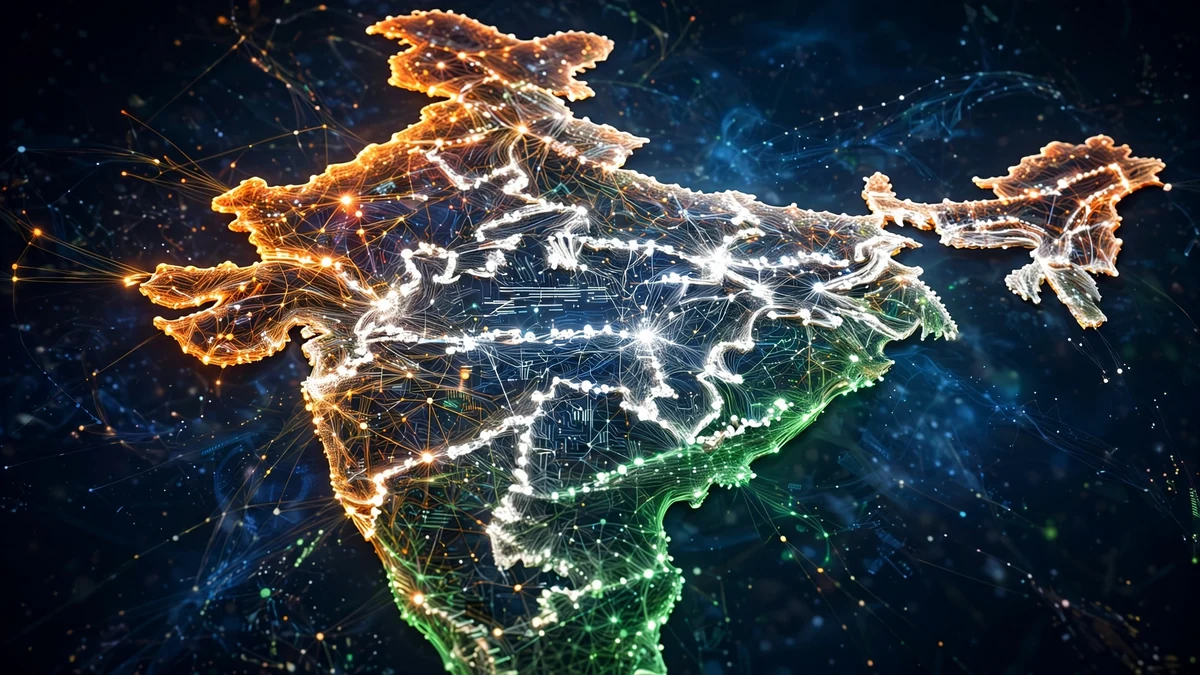
India has launched Chariot-1, a home-grown AI model built from scratch in India. The 11-billion-parameter model was launched on 26 November 2026 at Bharat Mandapam in New Delhi.
Updated: 27 November 2026, 10:30 IST
Quick Read
- Chariot-1 is a suite of two AI models: a text model and a text-to-speech model, both trained from scratch in India under the IndiaAI Mission.
- The text model has 11 billion parameters, but only 4 billion work on each word, which keeps its running cost down. It comes in three sizes: 10.7 billion, 1.7 billion and 745 million parameters.
- The speech model speaks English and 10 Indian languages, and a new open-source tool called IndicShift joins 12 Indian scripts into one shared alphabet of 350 letters.
What Chariot-1 is
MeitY Secretary S. Krishnan launched the Chariot-1 Foundation Models on 26 November at Bharat Mandapam in New Delhi, per the PIB release. Chariot Artificial Intelligence Pvt. Ltd., the firm behind them, is one of the first four teams picked under the IndiaAI Mission to build sovereign foundation models. The IndiaAI Mission is the government’s plan to help Indian teams build AI of their own, so India depends less on AI built in other countries.
A foundation model is a large AI model trained on huge amounts of text and data. Other apps and tools can then be built on top of it. Think of it as the base engine. A chatbot, a translation app or a voice helper can all run on the same base model. Most foundation models used in India today come from the US or China. Chariot-1 is one of the first built from scratch on Indian soil.
The words “trained from scratch” matter here. Chariot did not take a foreign model and tune it a little. It built its model from the ground up, with its own training runs in India, per the PIB release. That takes more time, data and computing power. But the model is fully Indian-owned, and it can be shaped around Indian languages from the start.
The 11-billion number, in plain words
The Chariot-1 text model is an 11-billion-parameter model. A parameter is a small dial inside the model that it tunes while it learns. More dials can mean a smarter model, but they also mean a heavier model that costs more to run. Eleven billion dials is a lot. Yet Chariot-1 is built as a mixture-of-experts model, and that changes the maths.
A mixture-of-experts model is a team of smaller expert models inside one big model. For each word it reads or writes, it wakes up only the experts it needs and leaves the rest asleep. Per the PIB release, only 4 billion of Chariot-1’s 11 billion parameters are active per word. So it thinks like an 11-billion-parameter model but runs at a cost closer to a 4-billion one. That is the whole point of the design.
Chariot offers the model in three sizes: 10.7 billion, 1.7 billion and 745 million parameters. The big one suits data centres and heavy work. The middle one can run on a good laptop. The smallest one, at 745 million, is light enough for a phone. Same model family, three weights. A developer can pick the size that fits the device at hand.
Also read: Sarvam 105B: India’s home-grown AI model
A voice that speaks 10 Indian languages
The second model in the suite is Chariot-1 Text-to-Speech, or TTS. It turns written text into spoken words. It speaks English and 10 Indian languages: Hindi, Bengali, Marathi, Tamil, Telugu, Kannada, Malayalam, Gujarati, Punjabi and Odia. That list covers most of India. A farmer in Odisha and a shop owner in Gujarat could both hear the same app speak in their own tongue.
Chariot says the speech model scored over 97% verbalisation accuracy on the Async TTS Pronunciation Benchmark, per the PIB release. That test used 1,029 real-world sentences and 2,251 tricky bits of text across 42 types, things like dates, prices, phone numbers and short forms. The figure comes from Chariot’s own tests, not from an outside check. No outside body has yet published its own test of the model, so readers should take the score as the maker’s claim for now.
Spoken text is full of traps. A date like 12/03 can mean 12 March or 3 December. A price like Rs 1,500 must be read as rupees, not as digits. Chariot says its model uses the full sentence to decide how to say such items, according to Express Computer. That is the hard part of speech AI.
IndicShift: one alphabet for 12 scripts
Chariot also launched IndicShift, an open-source tool that could matter as much as the models. India has many scripts. Hindi uses Devanagari. Bengali has its own script. So do Tamil, Telugu, Malayalam, Kannada, Gujarati, Punjabi and Odia. To an AI model, each script looks like a whole new set of letters to learn. That splits the training data into small piles, one per script.
IndicShift joins 1,012 characters across 12 Indian scripts into 350 shared letters, per the PIB release. Many Indian scripts share the same sounds. The letter for “ka” sounds the same in Hindi, Bengali and Tamil, even though it is written in a different way in each script. IndicShift treats those as one shared letter. The model then learns the sound once, not 12 times. That saves training effort and helps smaller languages, which have less text to learn from on their own.
Also read: IITs add 6,000 seats in robotics, AI and space
Who built it
Chariot was founded in 2026 in Noida by Stanford alumni Parth Sarthi and Suvrat Bhooshan, Inc42 reported. The two studied at Stanford in the US and came back to India to build AI here. The core team has just 12 people, The Outpost reported. Twelve people built an 11-billion-parameter model.
“Today is a proud moment for Chariot and for India,” co-founder Parth Sarthi said at the launch, per the PIB release. “Chariot-1 is a demonstration that world-class AI can be conceived, developed and trained in India.” S. Krishnan praised the two Stanford graduates for returning to India to build advanced AI technology, the release said.
Chariot is not the only IndiaAI Mission team with news this week. BharatGen, another team backed by the mission, launched Patram 1.5, a model that reads and works with documents, on the same day, Inc42 reported. Two home-grown models in one day shows the mission is now turning funding into real products.
| Model size | Where it can run | Best for |
|---|---|---|
| 10.7 billion | Data centre | Heavy work, big apps, many users at once |
| 1.7 billion | Laptop or small server | Office tools, apps with no big server |
| 745 million | Phone | On-device use, places with weak internet |
Here is the plain maths behind the design. Four billion active out of 11 billion means only about a third of the model works on each word. Roughly two-thirds stays asleep at any moment. So the model keeps the knowledge of a big model while paying the running cost of a much smaller one. That is why the same family can stretch from a data centre down to a phone.
What happens next
Chariot is now working on a model of around 70 billion parameters, to show its approach can scale up, Inc42 reported. Its longer-term aim is a trillion-parameter model, like rival Sarvam’s goal. A trillion is a thousand billion.
No date has been given for when developers or the public can use Chariot-1. The launch was a showcase, not a shop opening. The next thing to watch is whether Chariot releases the models for others to test, and what outside tests say about their quality. Until then, the facts are the launch, the sizes, the languages and the makers’ own scores. The rest is still to come.
Also read: Nasscom seeks AI scheme in Budget 2027-28
FAQ
What is Chariot-1?
Chariot-1 is a set of two AI models built in India: a text model and a text-to-speech model. The text model has 11 billion parameters. Both were trained from scratch in India under the IndiaAI Mission and launched on 26 November 2026.
Which languages does Chariot-1 speak?
The speech model speaks English and 10 Indian languages: Hindi, Bengali, Marathi, Tamil, Telugu, Kannada, Malayalam, Gujarati, Punjabi and Odia. A tool called IndicShift also joins 12 Indian scripts into one shared alphabet of 350 letters.
Can I use Chariot-1 now?
No date has been given for public use. The 26 November event was a launch and research showcase. Chariot has not said when developers or the public will get access, or on what terms.
Sources
- Press Information Bureau — IndiaAI Mission-supported Chariot-1 Foundation Models Launched (26 November 2026)
- Inc42 — IndiaAI Mission-Backed Chariot AI Unveils 11 Bn Parameter LLM, Speech Models (26 November 2026)
- Express Computer — IndiaAI Mission-backed Chariot Artificial Intelligence unveils an 11-billion-parameter language model (26 November 2026)
- CIOL — IndiaAI Mission-Backed Chariot Launches Indigenous Foundation Models for Indian Languages (November 2026)
- The Outpost — India launches Chariot-1, AI models built from scratch (November 2026)

Sasanka Sekhar Pradhan is the founder of India Presents, an India-focused news site. He covers daily box-office trackers, India news, economy explainers, sports previews and festival guides — in simple English, so readers across India can follow fast-moving stories without jargon. His focus is what a story means for the reader: the number that matters, the source behind it, and what happens next. India Presents publishes daily, with day-trackers updated as new figures come in.