Explainer: eighteen years after 26/11, India fights terror with a different set of tools — a federal probe agency, commando hubs in four cities, and a guarded coastline. This is what changed, and what still needs work.
Updated: 26 November 2026, 10:30 IST
Quick Read
- The 26/11 attacks exposed three gaps: no federal terror probe agency, commandos based only in Delhi, and a poorly guarded coastline.
- Within a year India created the NIA, set up four NSG hubs, and handed the Navy charge of overall maritime security.
- Officials now say Lashkar-e-Taiba is battered and forced to work through small cells and proxies — but it is still rebuilding.
This is an explainer. It looks at what India changed in its security setup after the 26/11 Mumbai attacks of 26–29 November 2008, when ten Lashkar-e-Taiba terrorists came by sea and killed 166 people over about 60 hours. The question it answers is simple: could the same attack happen the same way today?
The night that exposed the gaps
The gaps showed up fast on the night itself. The National Security Guard, India’s main commando force, was based at Manesar near Delhi. Its men had to fly to Mumbai, and the hours lost gave the gunmen time to dig in at the Taj, the Oberoi and Nariman House. On the sea, the ten attackers had sailed in on a hijacked fishing boat and landed without being stopped. And once the firing started, no single agency owned the terror probe — the case passed between state police forces, each with its own limits.
Three fixes followed within a year. Each one answered one of those gaps.
A new federal agency: the NIA
Parliament passed the National Investigation Agency Act in December 2008, within weeks of the attacks. The law set up the NIA as India’s first federal counter-terror agency, able to probe terror cases across state lines without waiting for each state to hand the case over. The agency started work in 2009.
That changed how big cases run. The NIA took the 26/11 probe itself, and it is the agency that brought Tahawwur Rana back from the United States in April 2025. Parliament widened the NIA’s powers again in 2019, with an amendment passed on 17 July that year. But the agency is stretched: as of July 2025 it had 541 posts vacant, a staff shortage of about 28 per cent.
Two more pieces of the same fix are less well known. The Intelligence Bureau’s Multi-Agency Centre, where agencies share inputs, was strengthened to run round the clock. And NATGRID, a shared database that lets security agencies pool records and track suspects, was set up in 2010. The Unlawful Activities (Prevention) Act was also amended to widen the definition of terrorism.
Commandos closer to every city
The second fix was about speed. In 2009 the government set up four NSG regional hubs — in Mumbai, Chennai, Hyderabad and Kolkata — so commandos no longer had to fly in from Delhi for every crisis. The hubs were made operational in June–July 2009, each with a Special Composite Group for rapid deployment. A fifth hub was added later at Gandhinagar in Gujarat, around 2018.
The logic is plain. Ten gunmen held parts of Mumbai for nearly three days in 2008, in part because the first responders were local police with ordinary weapons. Today, NSG men are stationed hours closer to the big cities of the south, east and west. The NSG’s Mumbai hub is the same unit that runs tonight’s #NEVEREVER memorial at the Gateway of India.
States built their own teams too. Maharashtra raised Force One, its own commando unit, so the state would not have to wait for central forces at all. Other states followed with their own special forces.
Also read: India declared Naxal-free
The sea got a new shield
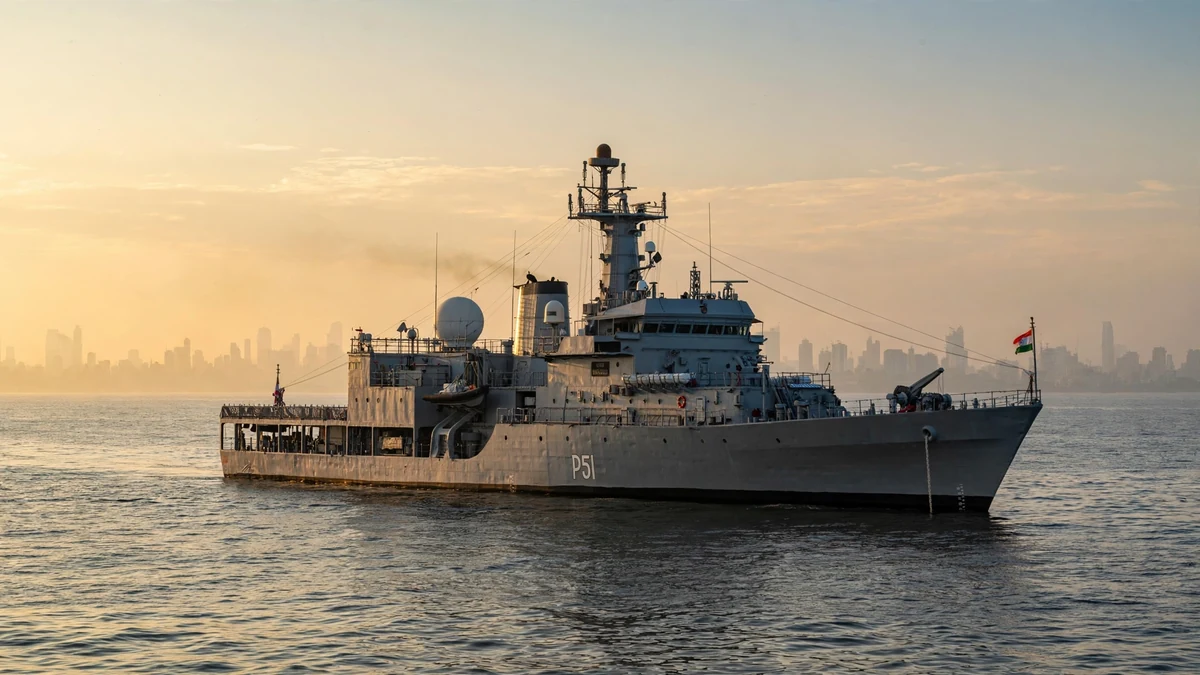
The third fix was the biggest. The attackers had come by sea, so the sea was where the rethink started. The Indian Navy was given charge of overall maritime security. The Coast Guard took charge of territorial waters, and state marine police took the inshore waters. Each layer now has one owner, where in 2008 the lines were blurred.
Under the Coastal Security Scheme, new coastal police stations were opened along the shore. The Navy raised the Sagar Prahari Bal for coastal patrolling and quick response. A Coastal Surveillance Network of radar sensors was put up to track vessels in real time, and all vessels longer than 20 metres were told to fit the Automatic Identification System, so they broadcast who they are. Fishermen were given ID cards, and joint coastal patrols and regular security exercises became routine.
That is a real change from 2008, when ten men in a hijacked fishing boat could reach Mumbai’s shore unseen. The coast is still hard to guard — India has a 7,517 km coastline — and gaps remain. But the sea route is no longer the open door it was.
Justice moved — slowly
Security is only half the story. The courts had their own slow road. Ajmal Kasab, the one attacker caught alive, was tried in a special court, given the death sentence in May 2010, and hanged on 21 November 2012 at Yerwada jail in Pune. His capture — made possible by ASI Tukaram Ombale, who died holding Kasab’s rifle at Girgaon Chowpatty — gave India the evidence to name the planners.
The longer wait was for Tahawwur Rana. He was extradited from the United States on 10 April 2025, and the NIA filed its first supplementary chargesheet against him on 9 July 2025. In March 2026 a Delhi court told the NIA to finish the supplementary chargesheet by May 2026. The case is now at the stage of arguments on framing of charges, with the next hearing on 18 December. Nothing has been decided yet — Rana is an accused, and the charges against him still have to be proved at trial.
| When | What happened |
|---|---|
| 26–29 Nov 2008 | 10 LeT terrorists attack Mumbai by sea; 166 killed over about 60 hours |
| Dec 2008 | NIA Act passed; India’s first federal counter-terror agency created |
| 2009 | NIA starts work; four NSG hubs open in Mumbai, Chennai, Hyderabad, Kolkata |
| 2010 | NATGRID set up to share intelligence data across agencies |
| 21 Nov 2012 | Ajmal Kasab hanged at Yerwada jail, Pune |
| 2019 | NIA Act amended; agency’s powers widened |
| 10 Apr 2025 | Tahawwur Rana extradited from the US; NIA arrests him on arrival |
| 9 Jul 2025 | NIA files first supplementary chargesheet against Rana |
| 2025 | Operation Sindoor hits LeT bases after the Pahalgam attack |
| Mar 2026 | Delhi court tells NIA to finish Rana supplementary chargesheet by May 2026 |
| 26 Nov 2026 | 18th anniversary of the attacks |
The enemy changed shape
What about the group that did it? An IANS analysis published on 25 November says Lashkar-e-Taiba is now “battered, forced to decentralise and rebuild”. In 2008 it ran open camps and its leaders held big rallies. Today, officials say, it has no single central base. Its main complex at Muridke, the Markaz-e-Taiba, was flattened during Operation Sindoor, the 2025 strikes that followed the Pahalgam attack.
The group now works through small cells of one to four men and through proxies such as The Resistance Front, which claimed the Pahalgam attack, so the trail back to the top stays hidden. Its chief, Hafiz Saeed, is in jail in Pakistan on terror financing charges, though Indian agencies say he still lives in comfort and stays in charge. The Home Ministry has said local LeT recruitment in the Kashmir Valley is now next to nil, and the group depends on infiltration from across the border.
India’s own stated rule has also changed. The IANS piece notes the doctrine adopted after the Pahalgam attack: an act of terror will be treated as an act of war, not as a cross-border incident. That doctrine did not exist in 2008.
What still needs work
The picture is not all fixed. The NIA’s staff shortage — 541 vacant posts as of July 2025 — is the clearest gap. Coastal policing still has to cover a 7,517 km shoreline, and small boats can still slip through. And the officials quoted by IANS add a warning of their own: LeT is down, not out. Its whole focus now is on rebuilding, and it may not be able to run an attack on the scale of 26/11 right away — but it will try to get back there.
Also read: Nepal’s ₹15,000 crore package and train link
So could the same attack happen the same way today? The tools are different: a federal agency exists, commandos sit in four cities, and the sea is watched. The group that attacked is weaker and pushed inland. But the case of its accused plotter is still before a court, the probe agency is short-staffed, and the men who planned 26/11 have not all faced trial. Eighteen years on, the rebuild is real — and unfinished.
Also read: JEE Main late fee deadline
FAQ
What is the NIA, and when was it created?
The National Investigation Agency is India’s federal counter-terror probe body. Parliament created it through the NIA Act, 2008, passed in December 2008 after the Mumbai attacks. It started work in 2009.
Where are the NSG hubs?
Four regional hubs were set up in 2009 at Mumbai, Chennai, Hyderabad and Kolkata, so commandos could reach a crisis without flying from Delhi. A fifth hub was added later at Gandhinagar, Gujarat.
Is Lashkar-e-Taiba still a threat?
Officials say it is battered and forced to work through small cells and proxies, and its main base at Muridke was destroyed in Operation Sindoor. But they also say it is rebuilding, so the threat has shrunk, not ended.
Sources
- IANS — From Mumbai 26/11 to today: Lashkar-e-Taiba battered, forced to decentralise and rebuild
- Drishti IAS — India’s evolving counterterror response since 26/11 attacks
- BharatNotes — Counterterrorism and intelligence: NIA, NSG, UAPA and intelligence architecture
- GKToday — Anti-terror institutional framework in India
- Swarajya — NIA files first supplementary chargesheet against Tahawwur Rana

Sasanka Sekhar Pradhan is the founder of India Presents, an India-focused news site. He covers daily box-office trackers, India news, economy explainers, sports previews and festival guides — in simple English, so readers across India can follow fast-moving stories without jargon. His focus is what a story means for the reader: the number that matters, the source behind it, and what happens next. India Presents publishes daily, with day-trackers updated as new figures come in.