The United States is ready to launch major strikes on Iran within 96 hours and is waiting only for President Donald Trump’s order. That is what a report leading Indian news channels says on Friday. It comes a day after fire hit Iran’s port city of Sirik and four oil tankers caught fire in and near the Strait of Hormuz.
Updated: 13 November 2026, 10:10 IST
Quick Read
- Sirik, a port city in Hormozgan province east of the Strait of Hormuz, was hit by “enemy fire” on Thursday 12 November, Iranian state media said. No one has said who fired, and no casualty or damage figures have been given.
- Iran’s Revolutionary Guards said on Friday 13 November that they hit a US early-warning radar in Bahrain, in reply to what they called an “enemy air attack”.
- Four tankers caught fire in the strait on Thursday. Two were supertankers carrying more than 4 million barrels of oil between them. These claims have not been checked by outside sources.
What happened at Sirik
Iran’s state news agency IRNA reported explosions at Sirik on Thursday. Sirik sits on Iran’s southern coast, east of the Strait of Hormuz, in Hormozgan province. State media called it “enemy fire”. That is all they said. They did not name an attacker. They gave no numbers for dead or hurt people, and no details of damage.
On Friday morning, Iran’s Revolutionary Guards said they had hit a US early-warning radar in Bahrain. They framed it as a reply to an “enemy air attack”. The US had not confirmed any radar hit at the time of writing. Bahrain hosts the US Navy’s Fifth Fleet, so a strike there would be a sharp step up — if it happened as claimed.
Four tankers on fire
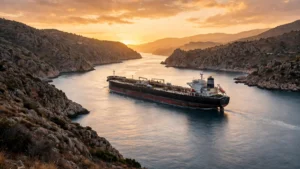
Four oil tankers caught fire in or near the Strait of Hormuz on Thursday, according to reports. Two were supertankers carrying more than 4 million barrels of oil between them. Iran says they ignored warnings and broke Tehran’s restrictions on shipping through the strait.
Two more tankers, east of the strait, were hit by naval mines, according to the Iranian army. That claim has not been checked by any outside source. The US military recently said all mines in the area had been cleared, which makes the mine claim hard to square — unless new mines were laid, which no one has shown.
Readers should treat the tanker claims with care. Fires at sea are real and visible, but who caused them, and how, is still disputed. No independent photos or ship-tracking proof had been published by the time this post was written.
Also read: Trump says Iran war is over after Qatar talks
The 96-hour report
Zee News led its coverage on Friday with this line: the US is ready for major strikes on Iran within 96 hours and is waiting for Trump’s order. That is a report, not an official US announcement. No US official has confirmed a 96-hour clock in public.
Trump himself has warned of fresh military strikes — only days after calling such strikes “unlikely”, NDTV reported. The same president who played down strikes last week is now talking them up.
Ninety-six hours from Friday is Tuesday. Nothing in the public record says strikes will happen that day — only that the military is ready and the choice sits with Trump.
How we got here
This week did not come out of nowhere. On 7 and 8 November, the US struck air defences on Qeshm Island, off Iran’s southern coast. Trump confirmed that strike and called it “minor”. Around the same time, US Central Command disabled a cargo ship, the MV Huda, in the Gulf of Oman.
Eleven vessels were hit or struck mines near the strait in the ten days to 10 November. The US also launched Task Force Iron Gate, a land blockade aimed at Iran, on 7–8 November. Oil prices fell on the news at first: Brent crude dropped 5.85% to $92.57 a barrel on 9 November, on hopes of a deal. That price was about 22% below the late-October high of more than $117.
Also read: India-EU trade deal set for December signing
What it means for India
About one-fifth of the world’s oil passes through the Strait of Hormuz. That is the number that matters for India. If shipping through the strait slows or stops, oil prices rise, and India buys most of its oil from abroad.
The US blockade has already pushed ships away: 147 have been redirected since July, according to reports.
One thing this post will not do: give a Brent crude price for today, 13 November. No verified price for today was available at the time of writing. The last checked price is $92.57 on 9 November. Any site quoting a “live” price for today without a source is guessing.
Also read: India rejects Pannun lawsuit against Doval, RAW chief
FAQ
Has the US attacked Iran?
The US struck air defences on Qeshm Island on 7–8 November, which Trump confirmed. The “major strikes within 96 hours” is a report, not a confirmed plan. No new US strike had been confirmed by the time this post was written.
Who hit Sirik port?
No one knows in public. Iranian state media said “enemy fire” hit the port city on 12 November but did not name an attacker or give casualty figures.
Why does the Strait of Hormuz matter to India?
About a fifth of the world’s oil moves through it. If the strait is blocked or unsafe, oil prices can jump fast, and India imports most of its crude oil.
Desk-original added context
Our own timeline, built from the reports read today: 7 November — the US disables the MV Huda cargo ship in the Gulf of Oman and launches Task Force Iron Gate; 8 November — the US strikes air defences on Qeshm Island, and Trump calls it “minor”; 9 November — Brent crude falls 5.85% to $92.57 a barrel; 10 November — the count of vessels hit or mined near the strait in ten days reaches 11; 12 November — fire hits Sirik port city and four tankers catch fire in the strait; 13 November — Iran’s Revolutionary Guards say they hit a US radar in Bahrain, and reports say the US is ready for major strikes within 96 hours. Our own maths: Brent at $92.57 was about $25 below the late-October high of more than $117 — roughly 22% down in about two weeks, before this week’s fires. One-fifth of world oil is about 20% of global supply, so any closure hits a fifth of supply at once. That is why Indian fuel prices move on every headline from Hormuz.
Sources
- News18 — Explosions rock Iran’s Sirik as Tehran claims port city near Strait of Hormuz hit by ‘enemy fire’ (13 Nov 2026, 200 verified; primary source)
- Zee News homepage lead, 13 Nov 2026 — “US ready for major Iran strikes within 96 hours, awaits Trump’s order: Report” (corroboration; no standalone article URL returned)
- NDTV, 13 Nov 2026 — Trump warns of fresh military strikes days after calling them “unlikely” (corroboration)

Sasanka Sekhar Pradhan is the founder of India Presents, an India-focused news site. He covers daily box-office trackers, India news, economy explainers, sports previews and festival guides — in simple English, so readers across India can follow fast-moving stories without jargon. His focus is what a story means for the reader: the number that matters, the source behind it, and what happens next. India Presents publishes daily, with day-trackers updated as new figures come in.